


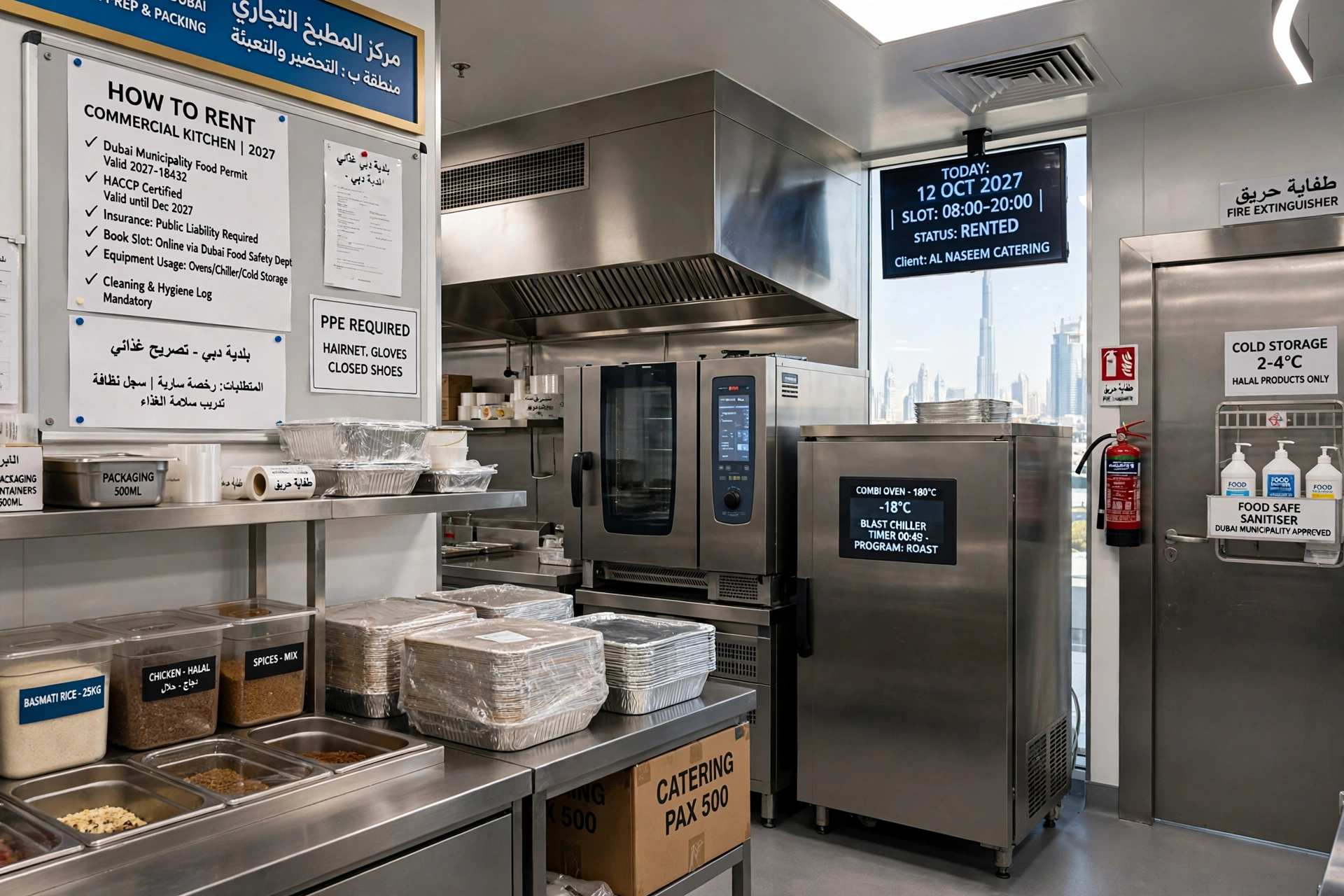
The Short Answer
To run a catering business in Dubai, you need a licensed commercial kitchen, a trade license with a catering activity, and a food establishment permit from Dubai Municipality. Most new caterers skip the build-out and rent a ready-to-use commercial kitchen, which usually costs roughly AED 5,000 to 25,000 per month depending on size, location, and whether it’s shared.
You can’t legally scale a catering business from a regular home kitchen, so renting a licensed space is the fastest and lowest-risk way to start. Talabna offers ready-to-operate commercial kitchen spaces in Dubai for catering businesses, restaurants, delivery brands, and food startups, with flexible rental options and launch support.
Costs and rules vary by source and change over time, so confirm current requirements with the authorities and your provider.
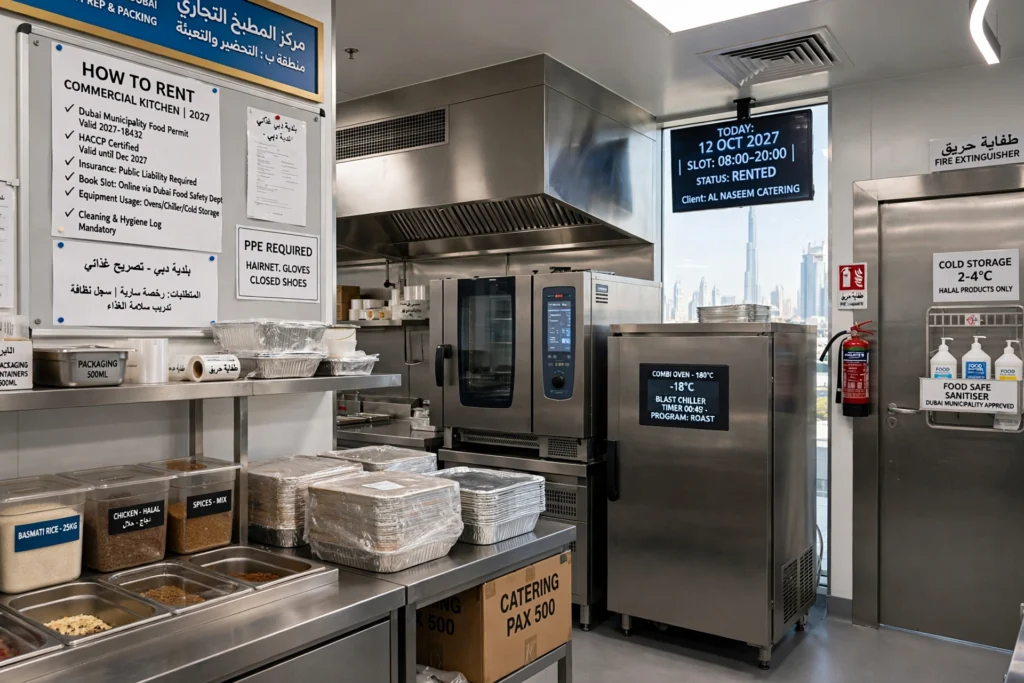
Commercial Kitchen for Catering in Dubai: Quick Facts
| Question | Short answer |
|---|---|
| Do I need a commercial kitchen? | Yes. A catering business can’t operate without an approved kitchen. |
| Typical monthly rent | Roughly AED 5,000 to 25,000, from public estimates |
| Licenses needed | Trade license with a catering activity, plus a Dubai Municipality food permit |
| Food safety paperwork | Approved kitchen layout, equipment list, and a HACCP-based food safety plan |
| Transport | Food transport vehicles need their own Dubai Municipality permits. |
| Best option for starting out | A shared or ready-equipped rental kitchen |
Why Caterers Rent Instead of Building
Building a commercial kitchen means buying equipment, getting your layout approved, and waiting for a fit-out. For a new caterer, that is a lot of cash tied up before the first booking.
Picture a caterer whose corporate lunch orders are growing. Her home setup can’t handle the volume, and building a kitchen would eat her savings. Renting a ready kitchen lets her say yes to bigger orders without that risk.
That is why rental is the most common route for new and growing caterers in Dubai.
What a Catering Kitchen Needs
Catering is different from running a restaurant. You prepare food in one place and serve it somewhere else, so your kitchen has to handle volume, storage, and transport.
Look for:
- Enough prep and cooking space for your biggest event, not your average day.
- Cold storage, including refrigeration and freezer space for bulk ingredients and prepared food.
- Dry storage for ingredients, packaging, and serving equipment.
- A workflow that separates raw and cooked food, which food safety inspectors check.
- Loading access so you can move trays and equipment to your vehicles quickly.
- Easy cleaning and waste removal.
Dubai Municipality doesn’t publish a single universal minimum size for catering kitchens, so match the space to your menu and volume rather than a fixed number.
Licenses and Permits for a Catering Business in Dubai
Public guides describe two tracks that run in parallel:
- A trade license from Dubai’s Department of Economy and Tourism, with a catering activity.
- A food establishment permit from Dubai Municipality’s Food Safety Department.
For the food permit, applicants are generally expected to provide an approved kitchen layout, an equipment list, and a HACCP-based food safety plan. Municipality inspectors visit the site before approval.
Catering has extra requirements. Sources describe a Dubai Municipality NOC for a central kitchen or catering facility, and vehicle permits for every vehicle that transports food. If you also deliver food or serve meals on-site, you may need a food delivery license.
For a deeper breakdown by business type, see this Dubai food license guide.
Ask your kitchen provider which of these steps they support and which you must handle yourself. That one question can save weeks.
Shared vs. Private Catering Kitchen
Shared kitchen: You use a licensed space alongside other brands. Rent is lower, which suits caterers with irregular orders or a small team. The trade-off is scheduling, so confirm your production slots in writing.
Private kitchen: The space is yours alone. It costs more, but it works for caterers with steady daily volume, large events, or specialized workflows.
If your bookings are still unpredictable, start shared and move to private once demand is consistent.
What Rent Should Include
Two kitchens at the same price can include very different things. Ask for a written breakdown that covers:
- the size of the space and your access hours,
- cooking equipment, refrigeration, and prep stations,
- dry and cold storage,
- utilities, internet, and waste removal,
- cleaning and maintenance, and
- loading access for event deliveries.
If something isn’t written down, assume it isn’t included. For a full look at what you’ll pay, read our guide to cloud kitchen rental costs in Dubai.
How to Rent a Commercial Kitchen for Catering (Step by Step)
- Estimate your volume. Count your largest event and how many days a week you’ll cook.
- Choose shared or private. Match it to your order pattern and budget.
- Shortlist two or three providers. Compare quotes line by line.
- Visit the kitchen. Check cleanliness, ventilation, storage, and loading access.
- Confirm licensing support. Ask what the provider handles and what you must arrange.
- Check hours and exit terms. Make sure your cooking window matches your event schedule.
- Sign and plan your first event. Do a trial production before your first big booking.
Mistakes to Avoid
- Renting for average days, not peak days. Plan space for your largest event.
- Ignoring storage. Catering needs more cold and dry storage than most delivery brands.
- Skipping the site visit. Photos won’t show workflow or loading problems.
- Forgetting vehicle permits. Transport rules apply even if your kitchen is fully licensed.
- Signing too long, too early. Test the kitchen with a real event first.
Why a Ready-to-Operate Kitchen Works for Caterers
A ready kitchen removes the slowest and most expensive parts of starting up. You don’t buy and install equipment, and you don’t wait on a build-out.
Talabna’s kitchens are fully equipped and set up for delivery operations, with flexible rental options so you can start at the level your bookings support. You can explore what we offer on our services page.
Ready to Rent a Commercial Kitchen for Catering in Dubai?
The quickest next step is to ask for a quote and see the space. Contact Talabna with your menu, your largest event size, and your preferred start date, and we’ll show you the options that fit.
FAQs
Yes. A catering business can’t operate without an approved, well-equipped kitchen. You can lease an independent kitchen or use a licensed shared commercial facility, depending on your budget and business model.
Public estimates put monthly rent between AED 5,000 and 25,000. Shared kitchens usually sit at the lower end, and private or larger kitchens cost more. Utilities and maintenance can add roughly AED 3,000 to 6,000 a month if they aren’t included.
You generally need a trade license with a catering activity and a food establishment permit from Dubai Municipality. Catering may also require a central kitchen NOC and permits for food transport vehicles. Requirements can change, so confirm them with the authorities before you apply.
Dubai has a home-based food permit route for small operations, but it isn’t designed for large-scale catering. If you plan to serve corporate clients or events at volume, a licensed commercial kitchen is the safer path.
It can be, especially when you’re starting out. Rent is lower, and the commitment is smaller. Make sure the kitchen offers enough cold storage and reliable production slots for your event schedule.
Leave a Reply